


Septarian Nodules and Similar Structures It seems improbable to me to be a thunderegg lover but not at least a bit fascinated by septarian nodules. They look superficially similar – at least in terms of the basic structure, which is (generally) a self-contained nodule through which cracks, fissures or similar cavities have opened up. However, the difference is that septaria are sedimentary in origin, as opposed to volcanic. They can originate in a range of rocks, such as limestone, shale, mudstone and others, and form through a concretion process. After that, they seem to follow a roughly similar path to thundereggs, with contraction and cracking taking place, which is then filled in with a range of materials – most often with crystals of various kinds, rather than agate. This sedimentary/concretion aspect means that there is one thing you can sometimes find in septaria that will never show up in a thunderegg … fossils! After all, the boundary between septaria, nodules and fossilisation processes is hardly precise. Another difference that I have become aware of since I started looking into these is that septaria can be drastically harder to polish than thundereggs! Or maybe I just need to learn the tricks. Some of these are quite famous – the kind of universal stone that every rock shop seems to have. These include the Moroccan septaria, the beautiful and intricate brown specimens at the top of the list below, and the American (Utah) specimens with greyish matrix and yellow calcite. I don’t have an example of that yet. I find them a bit annoying to be honest – often highly priced yet a bit too common, not to mention totally swamping search results with spheres, eggs, random polished chunks and specimens with bits chopped off for no discernible reason. I am simultaneously spoilt for choice and unable to find anything, let alone “the one” that might one day catch me. The name apparently comes from the Latin word “septum,” meaning partition or boundary, which refers to the lines running through it. They are also sometimes known as dragon stones or lightning stones.
|
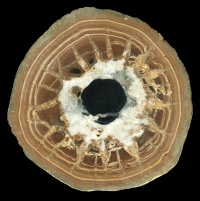 |
Septarian Nodules from Morocco |
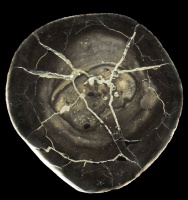 |
Manganese/Pyrite Septarian Nodules from East Wear Bay, Folkestone |
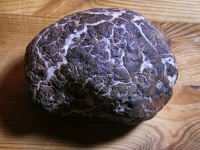 |
Septarian Nodules from Yorkshire (UK) |
 |
Coal/Pyrite Septarian from the Thames (Ephemeral) |
 |
Septarian Nodules from Walton-on-the-Naze |
 |
Septarian Nodules and Adjacent from Warden Point, Sheppy |
 |
Septarian Nodules from Cumbria, UK |
 |
Septarian Nodules from the Wardie Shales, Scotland |
 |
Septarian Nodules from Beauvoisin, France |
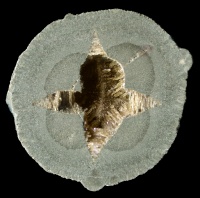 |
Barite Septarian Nodules from Drome, France |
 |
Septarian Nodules from Nowy Kościół, Poland |
 |
Septarian Nodules from the Caucasus |
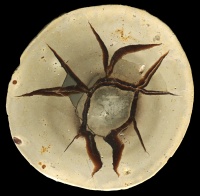 |
Septarian Nodules from Madagascar |


Countries:
USA - Canada - Alaska - Mexico - Argentina - Peru - France - Germany - UK - Poland - Greece - Turkey - Romania - Bulgaria - Slovakia - Kazakhstan - Uzbekistan - Russia - Japan - Ethiopia - Iran - Australia - Unknown